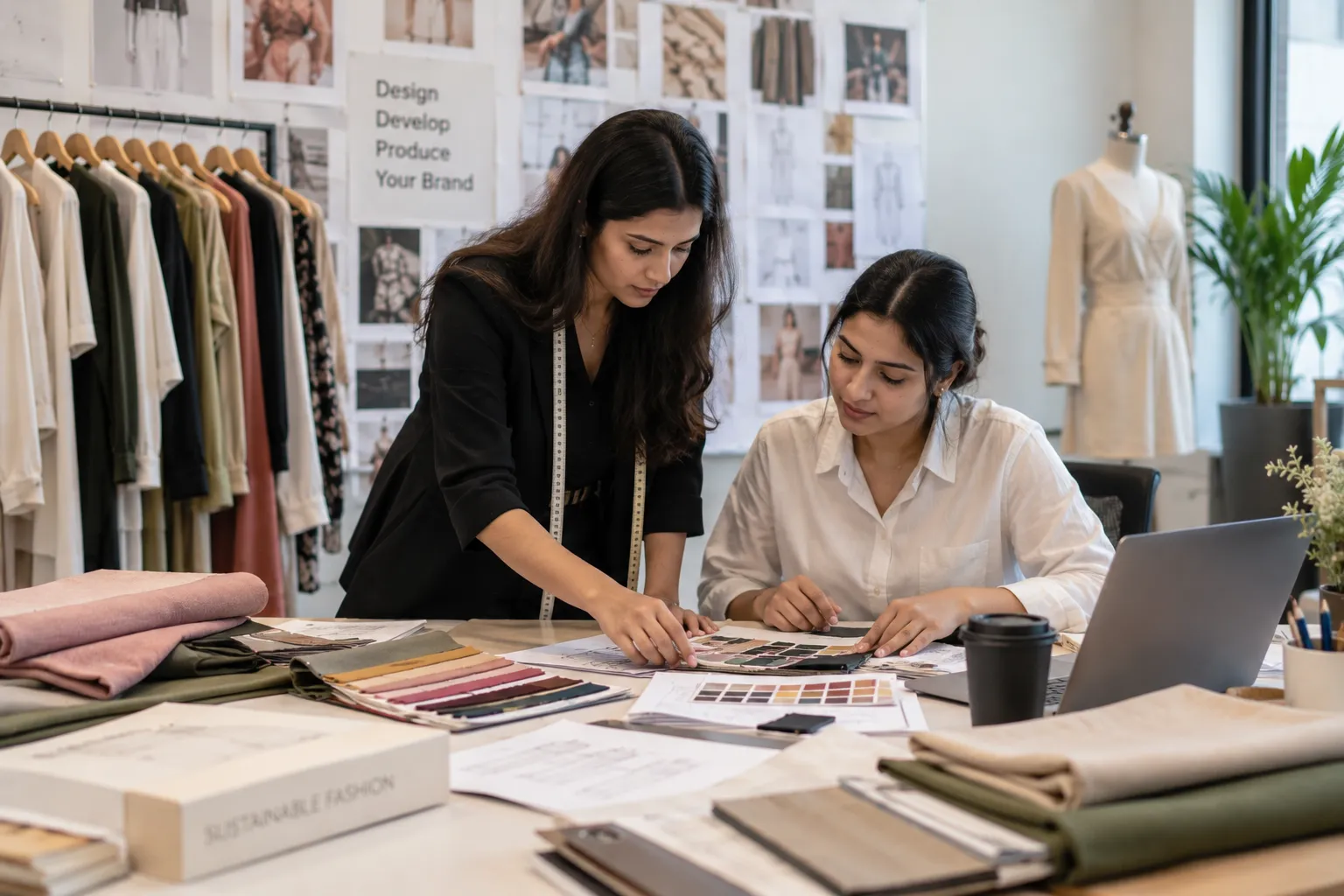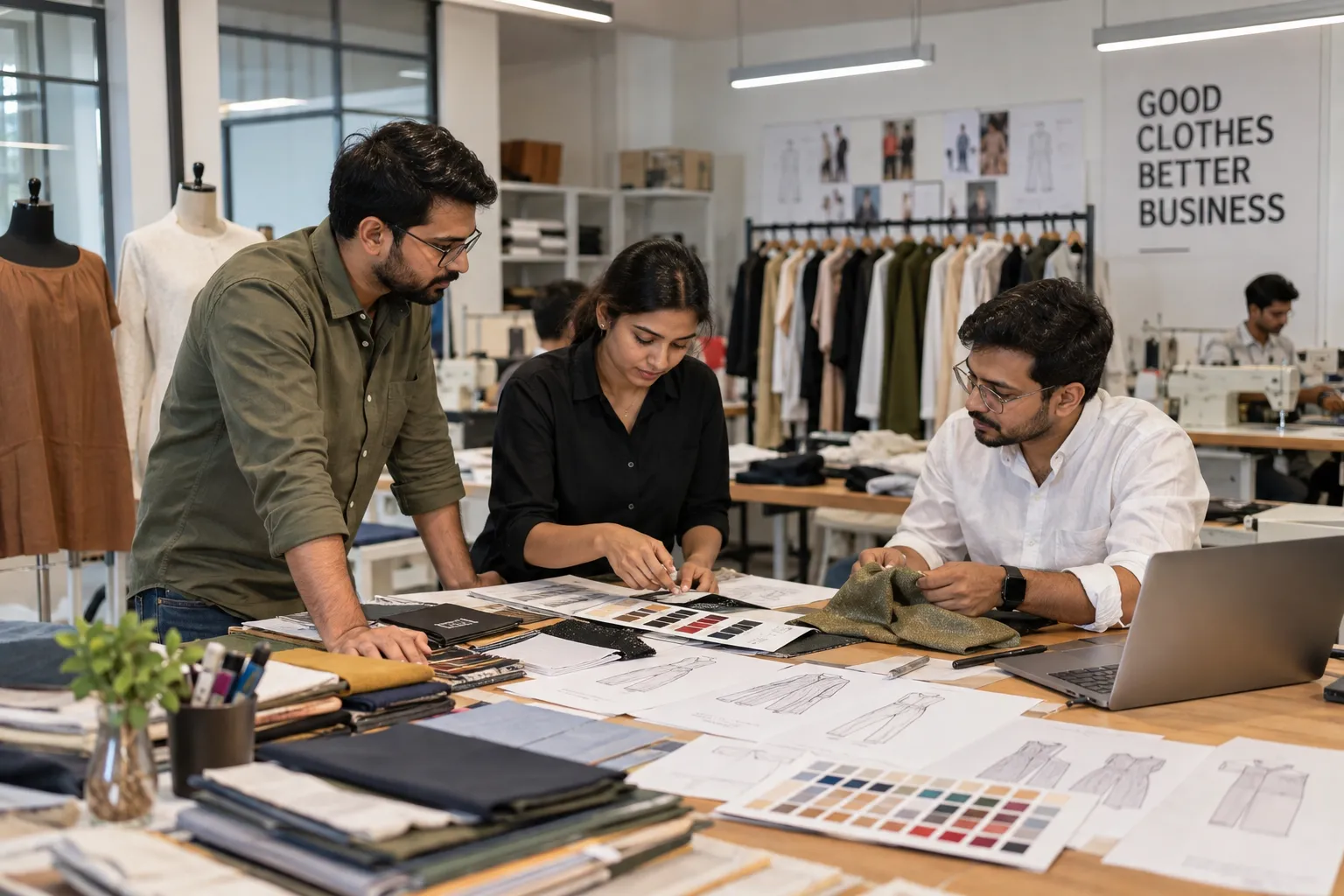
Every garment begins with an idea.
It might start as a simple sketch in a designer’s notebook, a reference image, a mood board, a fabric sample, or a vision for a new fashion collection.
But transforming that idea into a finished garment requires a carefully planned process.
Between the first design concept and the final product, there are multiple stages involving design development, fabric sourcing, pattern making, sampling, production, quality control, finishing, and packaging.
For fashion brands, retailers, startups, and private label businesses, understanding this process can make product development significantly easier.
It also helps brands communicate more effectively with their clothing manufacturer and avoid common production problems.
So, what actually happens between a fashion concept and the finished garment?
Let’s take a step-by-step look.
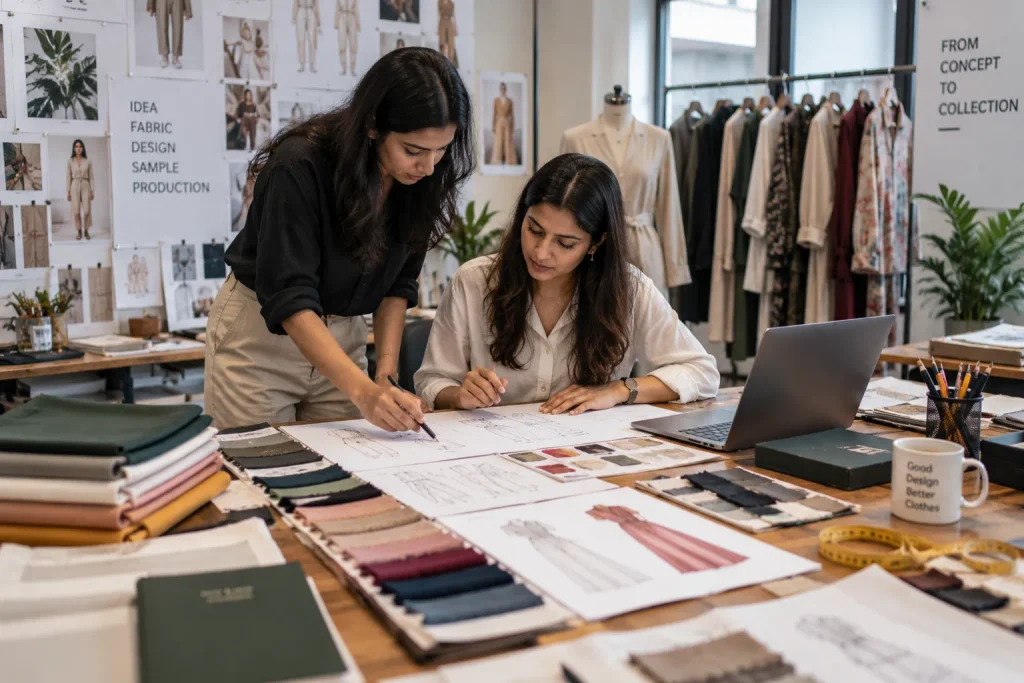
1. Everything Begins With a Product Idea
The manufacturing journey starts with an idea.
A brand may already know exactly what it wants to create, or it may need assistance developing the concept.
The starting point can include:
- Fashion sketches
- Technical drawings
- Mood boards
- Reference garments
- Fabric samples
- Images
- Tech packs
- Existing products
- Seasonal trends
At this stage, the objective is to understand what the final garment should look and feel like.
For example, a brand planning a women’s collection may decide to develop dresses, tops, co-ord sets, skirts, suits, and occasion wear.
A men’s collection may include shirts, T-shirts, trousers, shorts, jackets, and casual wear.
Kids’ collections can include dresses, shirts, T-shirts, co-ord sets, and everyday clothing.
Each category requires a different approach to development and manufacturing.
2. Understanding the Target Market
Before moving into production, it is important to understand who the product is being created for.
A garment designed for a premium fashion label will have different requirements from one created for a mass-market retailer.
Factors to consider include:
- Target customer
- Age group
- Price point
- Season
- Market
- Product positioning
- Expected quality
- Style
- Comfort
- Fabric preferences
For example, a premium women’s fashion brand may prioritize fabric texture, detailed finishing, and sophisticated construction.
A children’s clothing brand may focus more heavily on comfort, durability, practical construction, and easy movement.
Understanding the customer helps guide the manufacturing decisions that follow.
3. Creating a Tech Pack or Detailed Product Specification
For custom clothing manufacturing, detailed product information is extremely useful.
A tech pack can include:
- Product drawings
- Measurements
- Size specifications
- Fabric details
- Colour references
- Stitching details
- Labels
- Trims
- Print placement
- Embroidery
- Construction details
The more clearly the requirements are communicated, the easier it becomes for the manufacturing team to understand the product.
However, not every brand has a complete technical specification when approaching a manufacturer.
Some brands may only have a design, sample, or reference image.
In such cases, an experienced product development team can help convert the initial concept into a manufacturable product.
4. Fabric Selection and Sourcing
Fabric has a major impact on the final garment.
It influences:
- Appearance
- Comfort
- Weight
- Fall
- Durability
- Breathability
- Structure
- Price
Choosing the right fabric therefore requires more than selecting a colour or texture.
The fabric must be suitable for the garment’s intended use.
For example, lightweight materials may be appropriate for summer shirts or dresses, while structured fabrics may be better for jackets or tailored garments.
Fabric selection may also depend on the target market and product positioning.
A manufacturer with sourcing capabilities can help brands explore suitable material options based on their design and budget.
5. Pattern Making
Once the product specifications and fabric requirements are understood, pattern development can begin.
A pattern essentially provides the structure needed to cut the fabric into the different components of the garment.
Depending on the product, these may include:
- Front panels
- Back panels
- Sleeves
- Collars
- Cuffs
- Waistbands
- Pockets
- Linings
- Panels
- Other construction elements
Accurate pattern development is critical because it directly affects the garment’s fit and appearance.
A small mistake in the pattern can result in problems during sampling or bulk production.
6. Developing the First Sample
The first sample is where the concept starts becoming a physical product.
A sample allows the brand and manufacturer to evaluate the design in real form.
During this stage, the team can assess:
- Fit
- Measurements
- Fabric
- Construction
- Shape
- Stitching
- Colour
- Finishing
- Comfort
- Overall appearance
The first sample is not necessarily the final product.
It is often a starting point for improvement.
7. Reviewing and Revising the Sample
After receiving the first sample, the brand should carefully inspect it.
Some common observations may include:
- Sleeve length needs adjustment
- Body length needs modification
- Fit needs to be looser or slimmer
- Fabric needs to be heavier
- Colour needs adjustment
- Stitching needs refinement
- Pocket position needs changing
- Branding needs repositioning
These changes are communicated back to the manufacturer.
The sample can then be revised.
This process may happen more than once depending on the complexity of the garment and the level of accuracy required.
8. Approval Before Bulk Production
Bulk production should generally begin only after the final sample has been approved.
This approval confirms that the product meets the brand’s expectations.
The approved sample becomes an important reference for production.
It helps the manufacturing team maintain consistency across the production run.
For brands, this stage is especially important because changes made after bulk production begins can be expensive and time-consuming.
9. Preparing Materials for Production
Once the product is approved, the manufacturer prepares the required materials.
These may include:
- Fabric
- Thread
- Buttons
- Zippers
- Labels
- Tags
- Elastic
- Interlining
- Packaging materials
- Other trims
The quantity required depends on the production order.
Material planning helps ensure that production does not stop because of missing components.
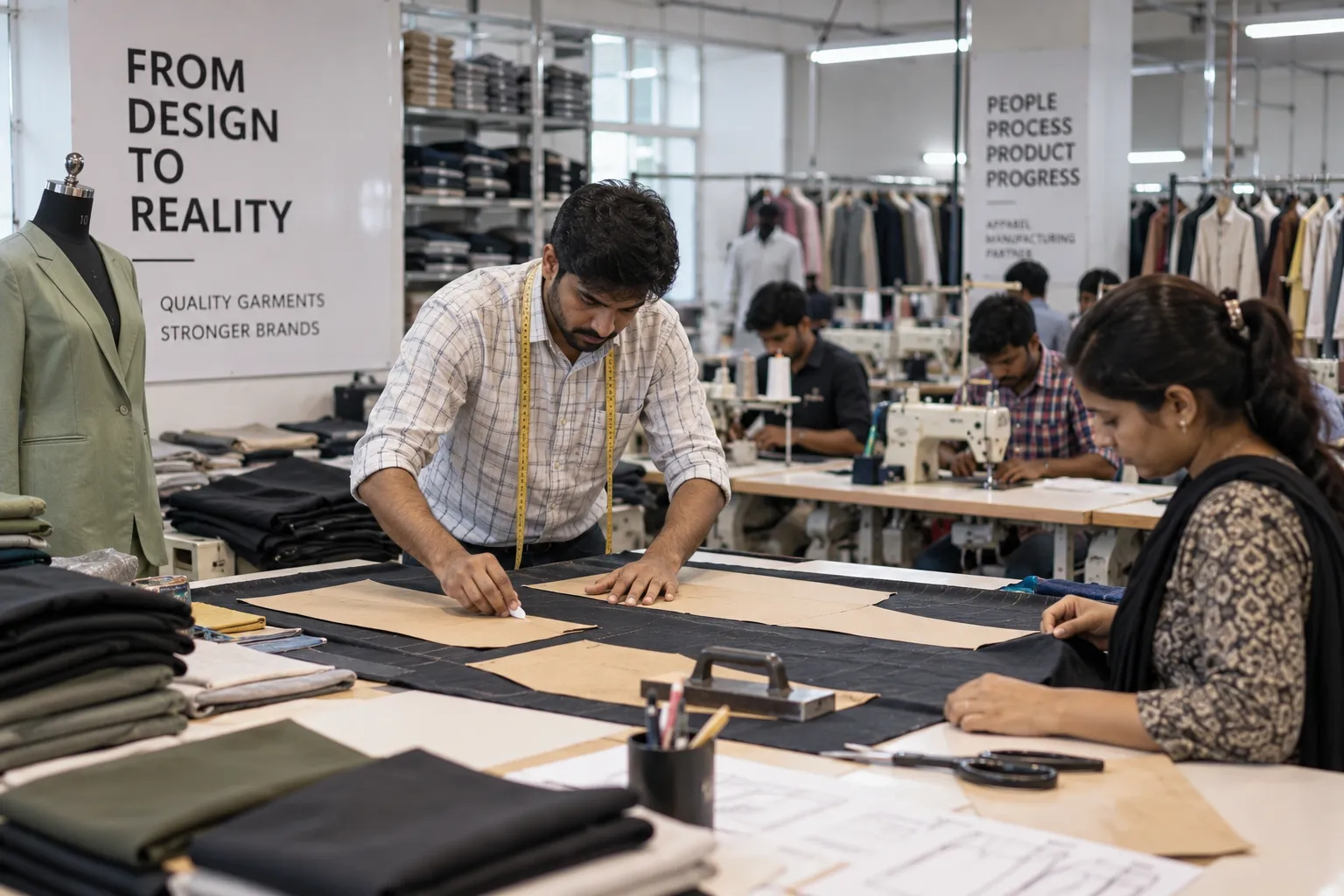
10. Fabric Cutting
Once the materials are ready, fabric cutting begins.
The patterns are used to determine how the fabric should be cut.
Efficient cutting is important because it can affect:
- Material usage
- Production cost
- Waste
- Consistency
The cut pieces are then organized according to the garment and production requirements.
Accurate cutting is essential because even small inconsistencies can affect the final garment.
11. Garment Stitching and Assembly
After cutting, the individual components move into the stitching and assembly stage.
Different parts of the garment are joined together according to the approved design and construction specifications.
Depending on the garment, this may involve:
- Shoulder seams
- Side seams
- Sleeve attachment
- Collar construction
- Pocket attachment
- Waistbands
- Closures
- Linings
- Decorative details
The complexity of this stage varies significantly between products.
A basic T-shirt may have a relatively straightforward construction process, while a structured jacket or detailed dress can involve many more steps.
12. Printing, Embroidery and Branding
If the garment includes branding or decorative elements, these may be added during appropriate stages of production.
Common requirements include:
- Screen printing
- Digital printing
- Embroidery
- Woven labels
- Printed labels
- Brand tags
- Logo applications
The placement, size, colour, and finish of these elements should match the approved specifications.
For fashion brands, branding details are particularly important because they contribute to the overall customer experience.
13. Finishing the Garment
Once the main construction is complete, the garment moves into finishing.
Finishing can include:
- Thread trimming
- Pressing
- Ironing
- Final stitching checks
- Button checks
- Zipper checks
- Label verification
- Shape correction
- Cleaning loose threads
Good finishing gives the garment a cleaner and more professional appearance.
It can also make a significant difference in how the finished product looks when it reaches the customer.
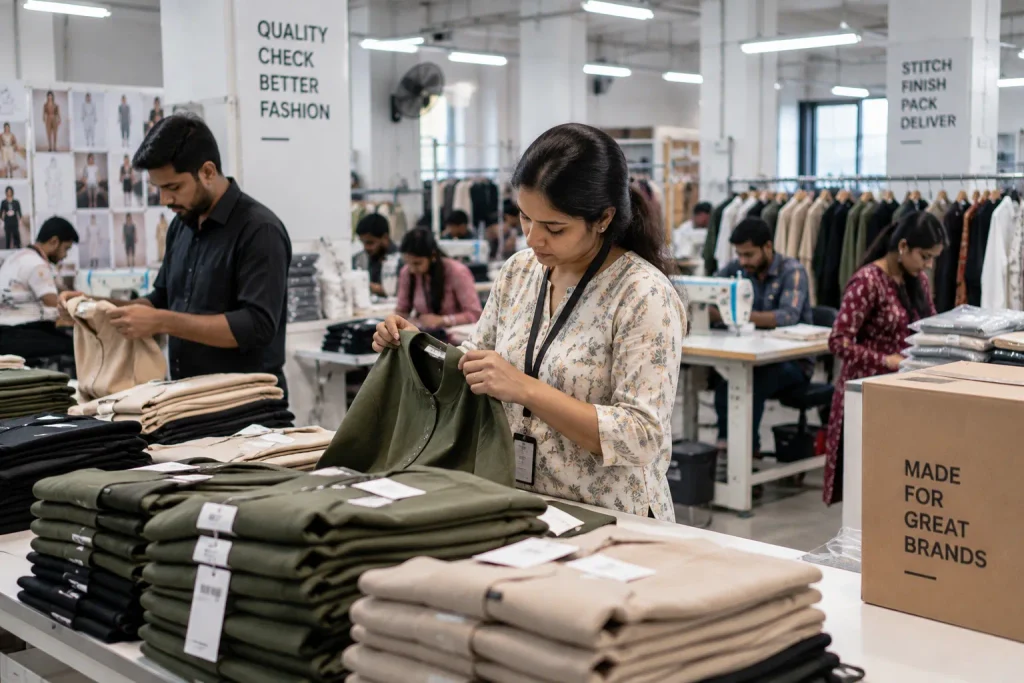
14. Quality Control
Quality control is one of the most important stages in apparel manufacturing.
Every production run should be checked against the approved product specifications.
Quality checks may cover:
Measurements
Are the garments within the required measurement tolerances?
Fabric
Are there visible defects, stains, colour inconsistencies, or other issues?
Stitching
Are seams secure and properly finished?
Construction
Does the garment match the approved design?
Branding
Are labels, prints, and embroidery correctly positioned?
Finishing
Is the garment properly pressed, cleaned, and presented?
The objective is to identify problems before products reach customers.
15. Size and Fit Consistency
For fashion brands, consistency across sizes is extremely important.
A customer buying the same style in different sizes should receive a product that follows the brand’s established grading and measurement standards.
Size development therefore requires careful attention to:
- Base size
- Size grading
- Measurement points
- Fit
- Proportion
This becomes particularly important for brands selling across different markets.
16. Packaging and Labelling
Once garments pass quality checks, they can be prepared for packaging.
Packaging requirements vary from brand to brand.
Some may require simple protective packaging, while premium fashion businesses may need custom branded packaging.
Requirements can include:
- Brand labels
- Size labels
- Care labels
- Hang tags
- Poly bags
- Boxes
- Custom packaging
- Shipping labels
Packaging should protect the garment while maintaining the brand’s presentation standards.
17. Preparing the Order for Delivery
The final stage is preparing the finished order for dispatch.
Depending on the client and destination, this may involve:
- Quantity verification
- Size-wise packing
- Product sorting
- Carton preparation
- Documentation
- Shipping coordination
For international clients, logistics and export requirements also become important parts of the overall process.
Why a Full-Service Clothing Manufacturer Can Make the Process Easier
Managing every stage separately can be challenging for a fashion brand.
Imagine having to find:
- One supplier for fabric
- Another for patterns
- Another for sampling
- Another for stitching
- Another for labels
- Another for packaging
This creates additional communication and coordination requirements.
A full-service manufacturing partner can simplify the process by bringing multiple stages together.
Depending on the manufacturer’s capabilities, this may include:
Design → Fabric Sourcing → Pattern Development → Sampling → Manufacturing → Quality Control → Finishing → Packaging
This approach can give brands greater visibility and make communication more efficient.
Private Label Manufacturing: Turning Products Into Your Brand
For many fashion startups and retailers, private label manufacturing is an attractive option.
Instead of building an entire production operation internally, brands can work with a manufacturer to produce garments under their own brand identity.
Private label services can include:
- Product selection
- Fabric options
- Custom colours
- Branding
- Labels
- Tags
- Packaging
- Production
This allows brands to focus more on areas such as:
- Marketing
- Retail
- E-commerce
- Customer experience
- Brand building
while their manufacturing partner manages production.
Custom Manufacturing for Unique Collections
Custom manufacturing is especially valuable for brands that want to create products that are different from standard market offerings.
A brand can provide its own:
- Design
- Sample
- Sketch
- Measurements
- Fabric requirements
- Construction details
The manufacturer then works to develop the garment according to those specifications.
This gives brands greater control over the final product and allows them to build a more distinctive collection.
Why the Manufacturing Partner Matters
A fashion brand’s reputation is directly connected to the products it sells.
Customers may notice:
- Fabric quality
- Fit
- Stitching
- Comfort
- Colour
- Finishing
- Durability
They do not necessarily know who manufactured the product.
But they will associate the quality of the garment with your brand.
That is why manufacturing should be considered an important part of brand building rather than simply a production expense.
A reliable manufacturing partner can help create consistency across collections and make future product development easier.
Building a Long-Term Manufacturing Relationship
The strongest manufacturing relationships are built over time.
As a manufacturer becomes familiar with a brand, they can better understand its:
- Quality standards
- Fit preferences
- Fabric preferences
- Product categories
- Production expectations
- Branding requirements
This familiarity can make future collections more efficient.
Instead of explaining every detail from the beginning, both teams can build on previous experience.
For growing fashion brands, this can become a valuable competitive advantage.
From Your Idea to Your Finished Collection
The journey from a fashion concept to a finished garment involves many individual steps.
A successful process depends on planning, communication, product knowledge, manufacturing expertise, and quality control.
Whether you are launching your first clothing collection or expanding an established fashion business, choosing the right manufacturing partner can make a significant difference.
At MEAMI Fashion Exports, we support fashion businesses through different stages of apparel manufacturing—from product development and material sourcing to production and finished garments.
Our approach is built around helping brands turn their ideas into products that are ready for their market.
Whether you are looking for private label manufacturing, custom clothing production, white label solutions, or product development, the right process can help you move from an initial concept to a finished collection with greater confidence.
A great garment starts with a great idea. A reliable manufacturing process turns that idea into something your customers can wear, remember, and come back for.